
Houston is a huge, spread-out city, and that cuts both ways for small business owners. There are more events, associations and meetups than anyone could attend, yet it is surprisingly easy to spend months going to mixers without making a single useful connection. The difference usually comes down to choosing the right Houston business networking groups for your goals and showing up in a way that people remember.
This guide explains the main types of networking groups you will find around Houston, what each is good for, how to evaluate a group before you commit time or dues, and how to turn introductions into actual referrals. It also covers the small practical details, like what to bring and how to follow up, that separate productive networking from coffee and small talk.
Start with a clear goal
Before you look at calendars, decide what you want from networking over the next six months. Different goals point to different groups:
- Customers: you want to meet people who buy what you sell, or who know people who do.
- Referral partners: you want relationships with businesses that serve the same customers without competing, such as a realtor, a mortgage broker and a home inspector.
- Learning and advice: you want mentors, peers at the same stage, or workshops on topics like financing or hiring.
- Visibility: you want your business name known in a specific neighborhood or industry.
Write your goal down. It makes it much easier to say no to events that do not fit.
Types of Houston business networking groups
Chambers of commerce
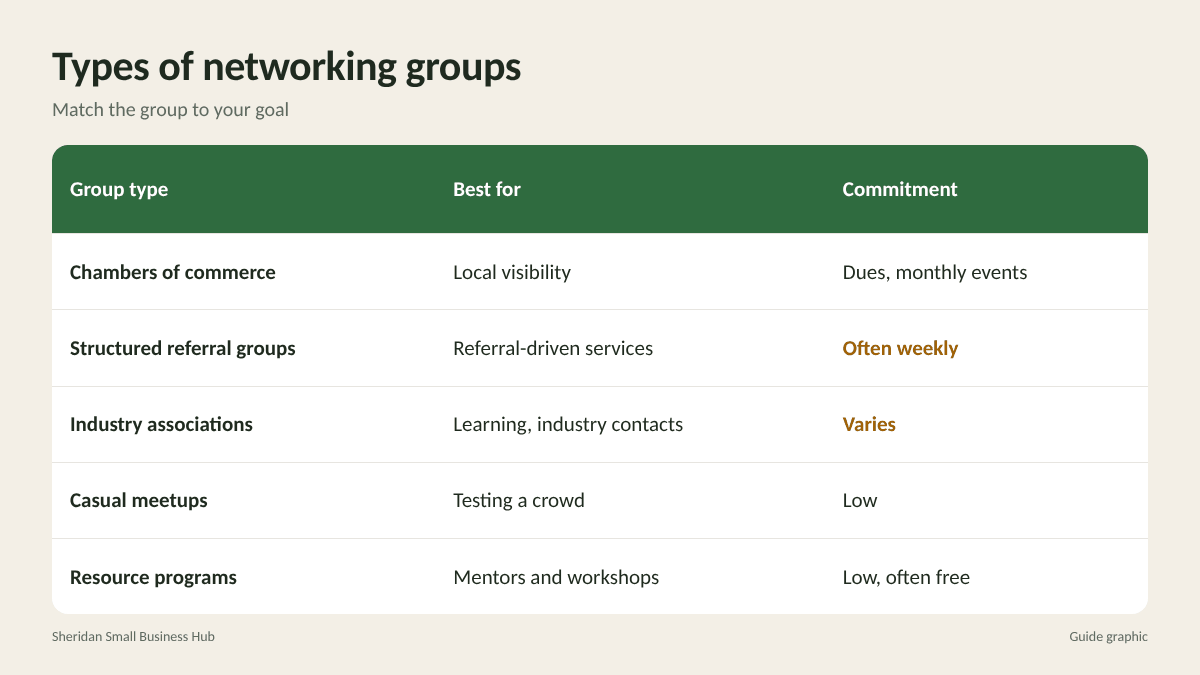
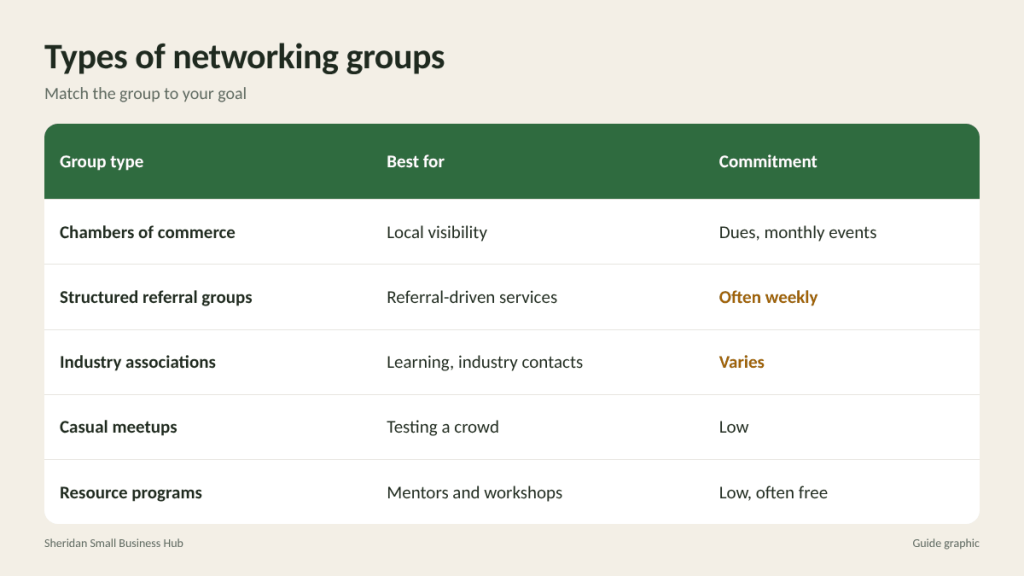
The Houston area has a regional business organization plus many smaller chambers focused on specific neighborhoods, suburbs, industries and communities, including cultural and ethnic chambers that reflect the city’s diverse population. Chambers usually host mixers, ribbon cuttings, luncheons and committee meetings, and many publish a member directory. They are good for visibility and broad local connections, and membership often comes with dues, so ask about the cost and what is included.
Structured referral groups
These groups meet on a fixed schedule, often weekly, and usually allow only one member per profession in each chapter. Members are expected to bring referrals to each other. They require a real time commitment and usually a membership fee, but for service businesses that live on referrals, such as insurance, real estate, contractors and accountants, they can be very productive.
Industry and trade associations
Houston has active associations for energy, healthcare, construction, real estate, hospitality, logistics and many other fields. These are best for learning, staying current on regulations and meeting people who influence buying decisions in your industry.
Casual meetups and online-organized groups
Platforms like Meetup and Eventbrite list free or low-cost gatherings: startup meetups, women in business groups, marketing breakfasts, tech nights and coworking events. They are low-commitment and good for testing whether a crowd fits you.
Free small business resource programs
Organizations such as SCORE (volunteer mentors) and Small Business Development Centers host workshops and advising sessions. Public libraries and community colleges also run business events. These are excellent for learning, and you meet other owners at a similar stage.
Neighborhood and district groups
Many areas, including Uptown and the Galleria, have business associations or management districts that bring local businesses together around issues like events, safety and foot traffic. If your customers live or work nearby, these are often the most practical connections you can make.
How to evaluate a group before you join
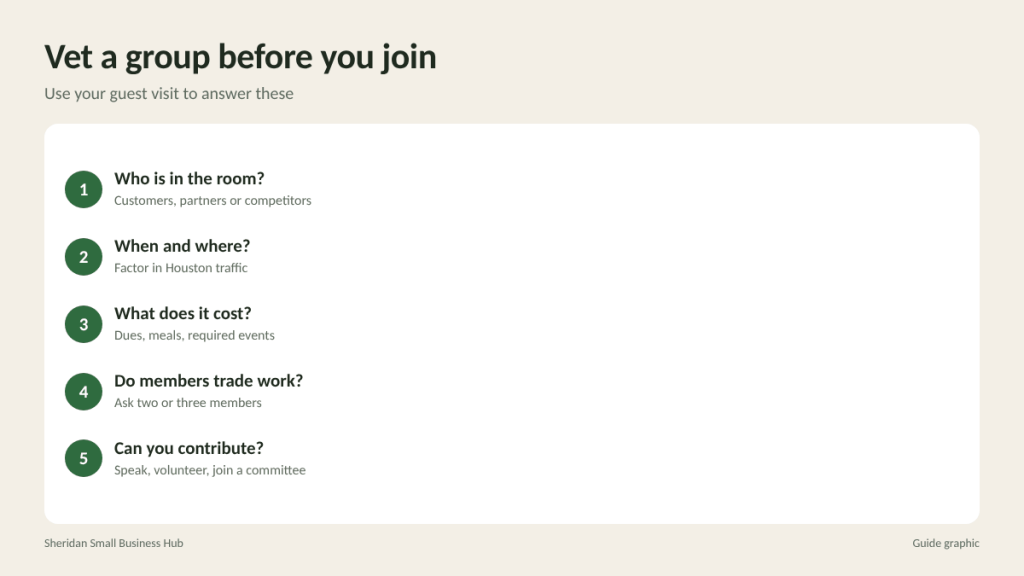
Most groups let you attend once or twice as a guest. Use that visit to answer a few questions:
- Who is in the room? Are they potential customers, referral partners, or mostly people selling the same thing you sell?
- How often does it meet, and when? A weekly 7 a.m. breakfast across town is a real cost in Houston traffic.
- What does it cost? Include dues, meal costs and any required events.
- Do members actually do business together? Ask two or three members whether they have gotten work or referrals from the group.
- Is there a way to contribute? Groups where you can speak, volunteer or join a committee build relationships faster than ones where you only mingle.
A good rule: pick one or two groups to commit to seriously rather than attending ten groups once each. Relationships come from repeated contact.
What to bring and how to prepare
- Business cards. They are still the fastest way to swap details at a mixer. Make sure yours are current, readable and say clearly what you do.
- A short introduction. One or two sentences that explain who you help and how, such as “I do bookkeeping for restaurants so owners can stop doing books at midnight.”
- A specific ask. “I’d love to meet property managers in Midtown” is far easier to help with than “anyone who needs my services.”
- Something useful to give. A tip, an introduction or a resource. People remember who helped them.
- A way to take notes. Jot a quick note on the back of each card you collect so you remember the conversation.
Making the most of each event
Arrive early, when the room is quieter and people are easier to approach. Aim for a few real conversations rather than collecting as many cards as possible. Ask questions about the other person’s business and listen for ways you can help. If you meet someone who would be a good contact for another person you know, offer an introduction. Being known as a connector is one of the fastest ways to build a reputation in any group.
Plan your logistics, too. Houston events are spread across a large area, and traffic on the West Loop, I-10 and the Southwest Freeway can turn a 20-minute drive into an hour at rush hour. Check parking details in advance, budget extra travel time, and consider whether a group that meets near your office or home is more sustainable than one across town. A group you can attend every month is worth more than a better-sounding one you can only reach occasionally.
Bring a small supply of printed material if it fits the event. A handout with your services can be useful at a trade-focused event, but a stack of brochures at a casual mixer can feel pushy. Business cards are almost always appropriate.
Following up so networking turns into business
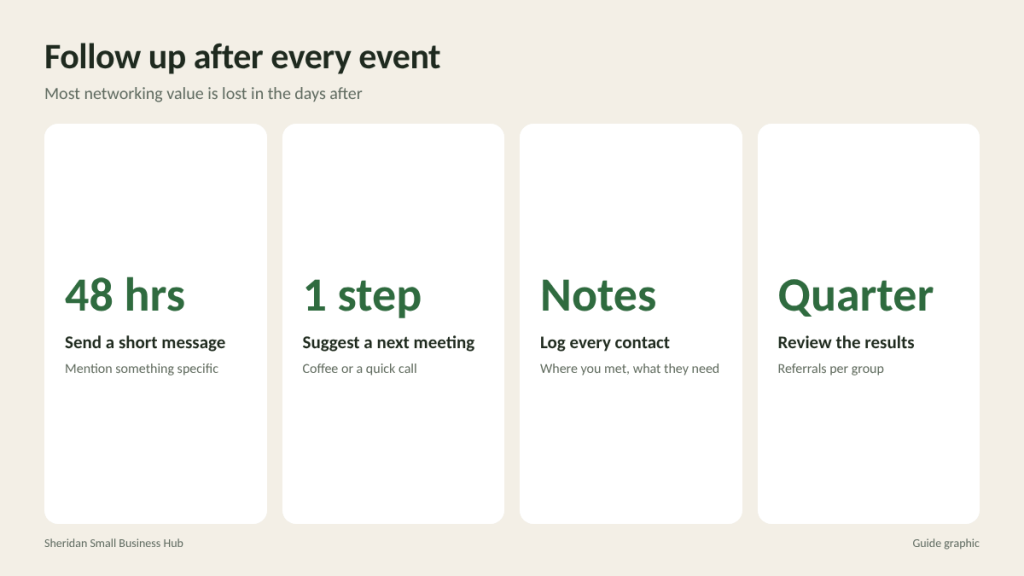
Most networking value is lost in the days after the event. Build a simple follow-up routine:
- Within 48 hours, send a short message to each person you had a real conversation with. Mention something specific you discussed.
- Suggest a next step for the most promising contacts, such as a coffee or a quick call.
- Add contacts to a simple list or CRM with a note about where you met and what they need.
- Deliver on any promise, such as an introduction or resource, quickly.
- Stay in touch every couple of months with something useful, not just a sales pitch.
Tracking whether it is worth your time
Networking takes hours you could spend running your business, so track the results. Every quarter, note how many events you attended, how many follow-up meetings you had and how many referrals or customers came from each group. Time spent in traffic counts too. If a group has produced nothing after six months of genuine effort, try another.
Frequently asked questions
Are chamber of commerce memberships worth it for small businesses?
They can be, especially for local visibility and community connections. Attend as a guest first and ask members what they have gotten from it.
How many networking groups should I join?
One or two that you attend consistently usually beat many groups attended occasionally.
Are there free networking options in Houston?
Yes. Many meetups, library events and small business workshops are free or low cost.
Do I still need business cards for networking?
Yes. They are quick to exchange, give people something to keep, and are a natural place to note what you discussed.
Heading to your next mixer?
Get your cards and event handouts ready with business printing in Houston’s Galleria area, so you are not caught empty-handed.