
You need a banner for a grand opening, a trade show or a booth at the weekend market, and the print order form asks a question you did not expect: vinyl or fabric? Both look fine in a thumbnail. In real life they behave very differently in wind, sun, rain, folding and shipping. Choosing wrong usually means a banner that wrinkles, fades early or flaps itself loose from its grommets. That is why the vinyl vs fabric banner decision deserves a minute of thought before you click order.
This guide explains how each material is made, where each one performs best, and the finishing options that matter. You will also get a quick decision checklist and care tips so your banner lasts more than one season.
What vinyl and fabric banners actually are
Vinyl banners
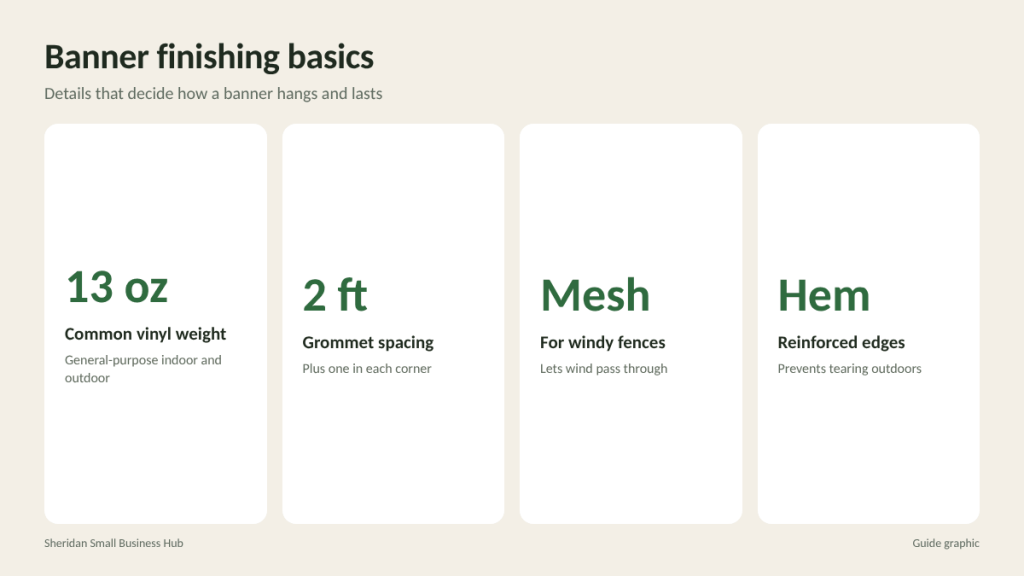
A standard vinyl banner is a PVC sheet with a polyester scrim (a mesh woven inside) that gives it strength. It is printed with solvent, eco-solvent, latex or UV inks that sit on the surface. A 13 oz vinyl is the common general-purpose weight; heavier weights are used for long-term outdoor signs, and mesh vinyl has tiny holes that let wind pass through.
Fabric banners
Fabric banners are usually polyester, printed by dye sublimation. Heat turns the ink into a gas that bonds with the fibers, so the color becomes part of the material rather than a layer on top. The result has a soft, matte look with no glare, and it can be folded and washed in many cases.
Vinyl vs fabric banner: side-by-side comparison
Here is how the two compare on the factors that come up most often for small businesses:
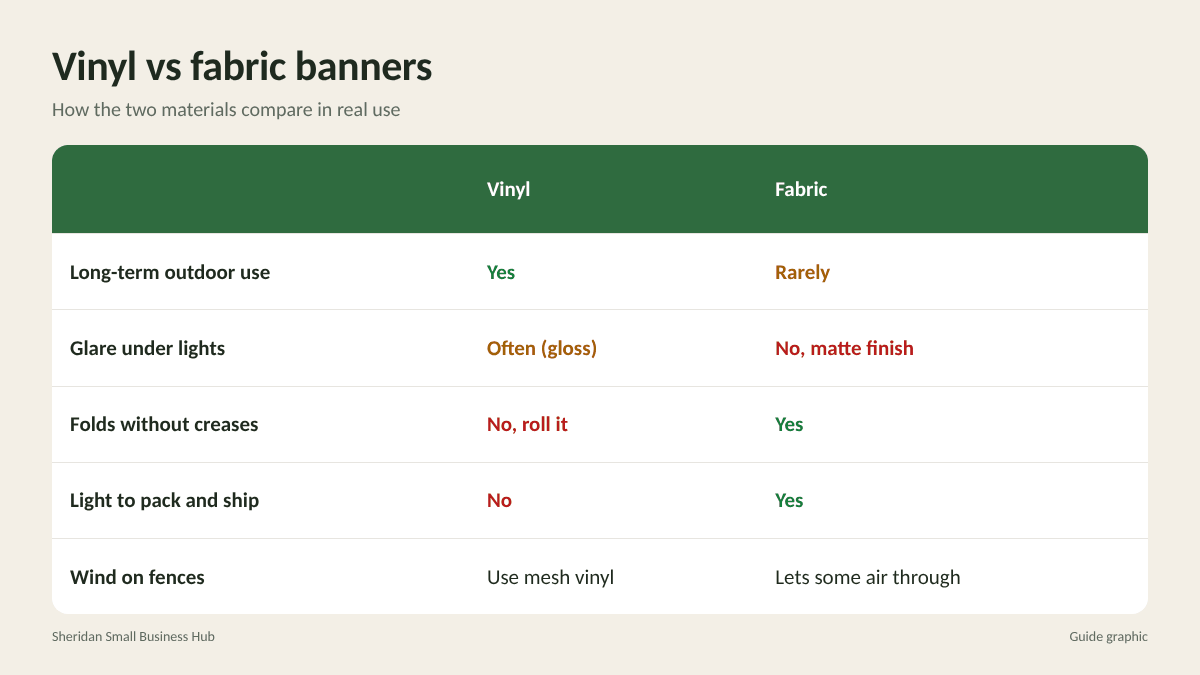
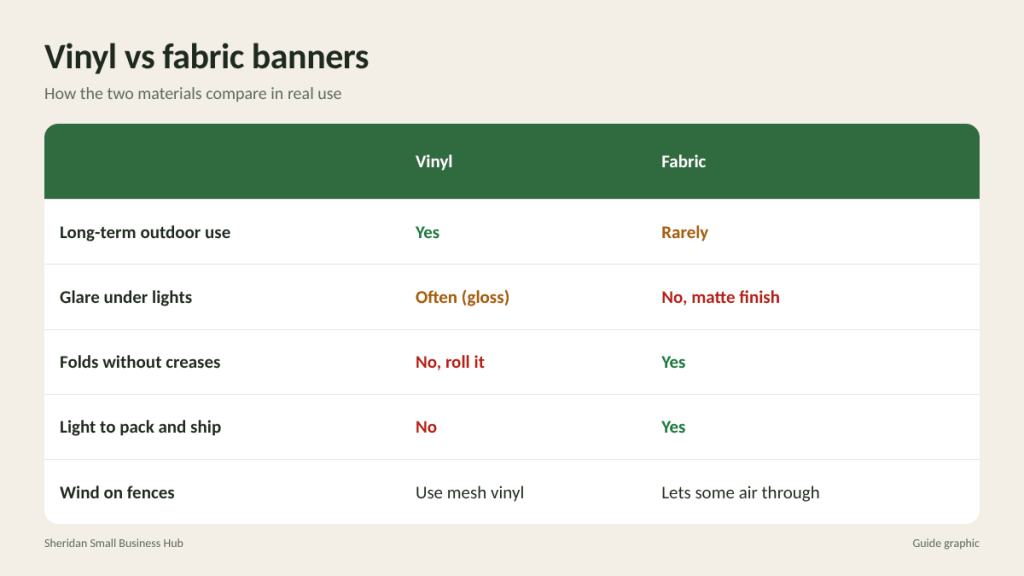
- Outdoor durability: Vinyl is the stronger choice for rain and long-term outdoor use. Fabric handles outdoor events but is better for short runs.
- Wind: Solid vinyl acts like a sail. Mesh vinyl or fabric lets some wind through and puts less strain on the mounting points.
- Glare: Fabric is matte and photographs well under lights. Glossy vinyl can reflect light, though matte vinyl options exist.
- Folding and storage: Fabric folds with few lasting creases. Vinyl should be rolled, printed side out, or it may crease and crack.
- Weight and shipping: Fabric is lighter and packs smaller, which helps when you travel to events.
- Cleaning: Vinyl wipes clean with mild soap and water. Many dye-sublimated fabrics can be gently washed; check the printer’s instructions.
- Typical cost: Vinyl is often the budget option for simple outdoor signs. Fabric tends to cost more but looks more premium indoors. Ask for quotes on both.
When vinyl is the better choice
Choose vinyl when the banner faces the weather or needs to stay up for weeks:
- Storefront “Now Open” or “Coming Soon” signs hung on a fence or building.
- Construction site signs and real estate signs.
- Sports field and school fence banners.
- Seasonal sale banners that hang outside for a month or more.
For fences and open areas where wind is a concern, ask for mesh vinyl. You give up a little color density because of the holes, but the banner and its mounting hold up much better in gusty conditions.
When fabric is the better choice
Fabric shines indoors and anywhere the banner will be seen up close, photographed or packed often:
- Trade show backdrops and tension-fabric displays.
- Retractable banner stands you set up at multiple events.
- Table covers and step-and-repeat photo walls.
- Hanging banners in a lobby, gym or showroom where glare would be a problem.
If your business attends several events a year, fabric’s light weight and wrinkle resistance matter more than you might think. A banner that folds into a carry bag is much easier to manage than a long vinyl roll in the back seat.
Finishing options that make or break a banner
The material is only half the decision. Finishing determines how the banner hangs and how long it lasts.
- Hemming. Edges are folded and welded or sewn to prevent tearing. For outdoor vinyl, a hemmed edge is worth it.
- Grommets. Metal rings for tying or hooking. A common spacing is every 2 feet along the edges, with one in each corner. Tell your printer if you need tighter spacing for windy spots.
- Pole pockets. Sleeves along the top and bottom for a pole or rod. Common for indoor hanging and street pole banners.
- Wind slits. Small cuts in solid vinyl that relieve pressure. Mesh is usually the better solution if wind is a known issue.
- Hardware. Bungee cords and zip ties for fences, S-hooks for frames, and stands for indoor fabric.
Measure where the banner will hang before you order, including the distance between mounting points. A banner that is 6 inches too wide for its spot will sag no matter which material you choose.
Design tips for either material
- Keep text big. A banner is read from a distance and usually in seconds. Use a short headline and one call to action.
- Use high contrast. Dark text on a light background, or light on dark, reads better than colors close in tone.
- Leave a safe margin. Keep important text away from hems and grommets so nothing gets punched through or folded under.
- Send print-ready files. Ask your printer for their preferred format, resolution and color mode before you finish the design.
Picking the right size
Size is the other decision that trips people up. Start from the viewing distance, not the space available. A banner read from across a parking lot needs much bigger lettering than one hung behind a booth table, and bigger letters need a bigger banner to hold the same message.
- Behind a 6 foot or 8 foot table: match the banner width to the table, or go slightly narrower so it does not overhang the booth next to you.
- On a storefront or fence: measure the clear space between posts or mounting points, then subtract a few inches on each side for ties.
- On a retractable stand: use the exact print size the stand manufacturer lists. The bottom few inches often disappear into the base, so keep text above that area.
Once you have the size, cut your message to fit it. A banner with a business name, one benefit and one phone number or web address almost always beats a banner crowded with every service you offer.
Common banner mistakes to avoid
- Ordering solid vinyl for a windy fence. The banner tears at the grommets or pulls the fence ties loose within days.
- Folding vinyl for storage. Creases set in and the ink can crack along the fold lines.
- Using low-resolution logos. A logo copied from a website looks sharp on screen and blurry at banner size.
- Forgetting the hardware. Bring zip ties, bungees or clamps to every event so you are not improvising with tape.
- Skipping the proof. Always review a final proof for spelling, phone numbers and dates before the job prints.
Care and storage
A well-kept banner can be reused for several events. For vinyl, wipe it clean, let it dry completely and roll it with the printed side facing out. For fabric, shake off dust, spot clean or wash according to the printer’s directions, and fold or roll it into a dry bag. Store both away from heat and direct sun.
Before each event, inspect the grommets and hems. A small tear near a grommet grows quickly in wind, and catching it early saves the whole banner.
Quick decision checklist
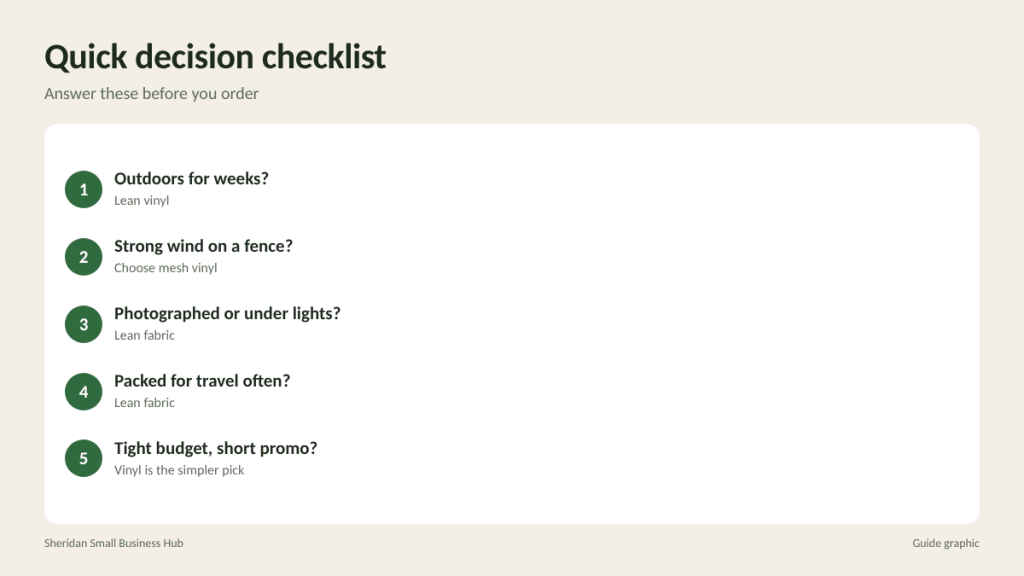
- Will it hang outdoors for more than a few days? Lean vinyl.
- Will it face strong wind on a fence? Choose mesh vinyl.
- Will it be photographed or used under bright lights? Lean fabric.
- Will you pack it for travel often? Lean fabric.
- Is the budget tight for a short outdoor promotion? Vinyl is usually the simpler pick.
Frequently asked questions
Can fabric banners be used outside?
Yes, for events and short-term displays. For banners that stay up for weeks in rain and sun, vinyl usually holds up better.
What is the most common vinyl banner weight?
A 13 oz vinyl is the common general-purpose choice. Heavier weights are available for long-term outdoor signs.
Do vinyl banners crease?
They can if folded tightly or stored folded for a long time. Roll vinyl banners with the print facing out to avoid creases.
Which material is better for trade shows?
Fabric is the usual choice because it is lightweight, glare-free under show lighting and easy to pack between events.
Ready to print your banner?
Houston businesses can get vinyl and poster jobs done through The Postal Spot’s banner and poster printing service, with staff who can help you pick the right size and finish.